
8 Questions with Headmaster Brian Sargent
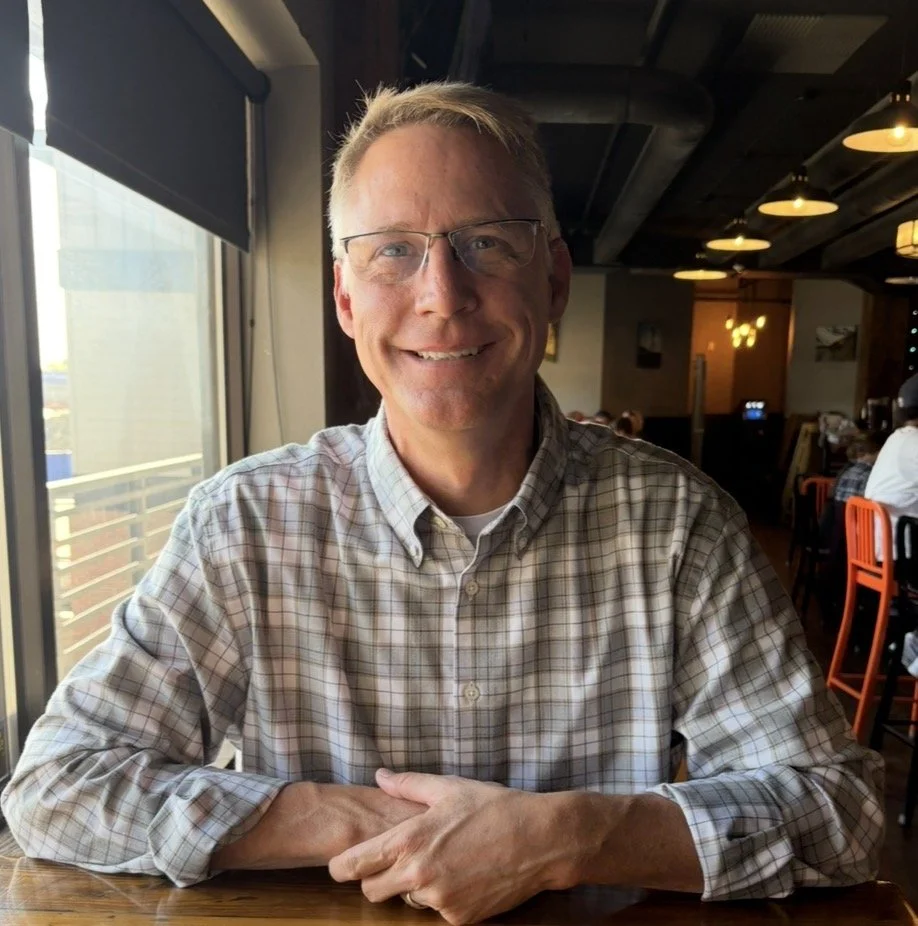
Headmaster Brian Sargent
8 questions. 8 answers. One mission.
Behind every great school is a person who said yes. Meet the man leading Chesterton Academy of St. Carlo Acutis — in his own words.
1. What inspired you to become the founding headmaster of Chesterton Academy of St. Carlo Acutis?
What inspired me to become the founding headmaster of Chesterton Academy of St. Carlo Acutis is a deep desire to place my gifts in service to God by helping build a school rooted in faith, truth, and joy. The opportunity to found a new Catholic high school is both a profound responsibility and a tremendous privilege. I am inspired by the chance to help form young men and women not only intellectually, but also spiritually and morally, so that they may discover their God-given purpose and become faithful leaders in their families, communities, and the Church. Creating a school culture centered on Christ and guided by the rich traditions of Catholic education is a mission that I embrace with great enthusiasm and gratitude.
2. For families unfamiliar with classical education, how is a Chesterton Academy education different from a traditional high school experience?
Classical education is not an educational experiment or a passing trend. It is a time-tested approach that has formed great thinkers, leaders, and saints for centuries. Rather than focusing primarily on standardized tests, career trends, or ever-changing educational fads, a classical education immerses students in the great books, ideas, and traditions that have shaped Western civilization and the Catholic intellectual tradition.
At Chesterton Academy, students engage deeply with the writings of history’s greatest thinkers, authors, philosophers, and theologians. These works challenge students to think critically, communicate clearly, and pursue truth with both intellect and humility. We believe that the content students spend their time studying should be worthy of their attention and capable of forming both their minds and their character.
Our goal is not simply to prepare students for college, but to cultivate a lifelong love of learning and a genuine pursuit of wisdom. By encountering the best that has been thought and said throughout history, students develop the habits of mind and heart necessary to become thoughtful problem-solvers, faithful disciples, and virtuous leaders in their families, communities, and professions.
3. Chesterton Academy often talks about forming the whole person. What does that look like in everyday student life?
When I see genuine joy in students—not just in a few individuals, but throughout an entire school community—I am reminded that such joy does not happen by accident. It is the fruit of a purposeful culture that helps students become the men and women God created them to be.
At Chesterton Academy, that formation begins with a vibrant spiritual life. Daily Mass, prayer, and the sacraments are at the center of our school day. But faith is not meant to remain inside the classroom or chapel; it must be lived out through action. Whether serving at a soup kitchen, visiting residents at a retirement home, or helping those in need within the community, students learn that authentic faith expresses itself through love and service.
Academic excellence is important, and our students are challenged intellectually every day. However, academics are not our ultimate goal. Our mission is to form young people of virtue, character, and faith. We want students to develop the habits that will help them live meaningful lives, serve others generously, and ultimately keep their eyes fixed on their highest calling: heaven.
4. In a world dominated by screens and social media, how does Chesterton Academy help students build real friendships and meaningful community?
That is one of the great challenges facing young people today. While limiting phone use during the school day can certainly help reduce distractions, it is not enough on its own to solve the deeper problem of loneliness and isolation.
At Chesterton Academy, we strive to create an environment where students can encounter one another—and God—in a more meaningful way. Real friendships are built through shared experiences, face-to-face conversations, common goals, and a sense of belonging. Our students pray together, learn together, serve together, and participate in school traditions that foster genuine community.
I also believe that young people need opportunities for silence and reflection. In a world filled with constant noise and digital stimulation, moments of prayer, Adoration, and quiet contemplation allow students to listen to God and better understand themselves and others. It is often in that stillness that they find clarity about their relationships, their struggles, and how they are called to love and serve those around them.
When God is at the center of a student's life, friendships become deeper, conversations become more meaningful, and community becomes something much richer than simply being connected online. Our goal is to help students build relationships that are rooted in virtue, authenticity, and a shared pursuit of what is true, good, and beautiful.
5. What kind of student thrives at Chesterton Academy? Do students need to already be Catholic or academically advanced to succeed here?
Absolutely not. Students do not need to be Catholic—or even Christian—to attend Chesterton Academy. We welcome students from a variety of backgrounds, provided they are willing to respect the school's mission, culture, and expectations.
Likewise, students do not need to be academically advanced to succeed here. What matters most is a willingness to learn, to grow, and to persevere when challenges arise. One of the sayings in my home is, "Rise each time you fall." That mindset is far more important than any test score or academic achievement.
Certainly, students who already have a strong academic foundation may find some aspects of their studies easier at first, just as students familiar with the Catholic faith may more readily understand parts of our culture and curriculum. But success at Chesterton Academy is not determined by where a student begins—it is determined by their willingness to engage in the journey.
Throughout my career, I have found just as much joy in teaching struggling students as I have in teaching academically gifted ones. In fact, some of the most rewarding moments come from watching a student overcome obstacles, develop confidence, and accomplish something they once thought was beyond their reach. Growth, effort, and perseverance are qualities we deeply value.
As a favorite quote often attributed to Yoda reminds us: "The master has failed more times than the beginner has ever even tried." At Chesterton Academy, we are not looking for perfect students. We are looking for students who are willing to keep trying, keep growing, and become the people God created them to be.
6. Why do you believe the liberal arts, humanities, and face-to-face discussion are still important in today’s world?
I am not sure I would have chosen a career in education if I did not believe that the liberal arts, humanities, and meaningful human interaction are essential. At the same time, I firmly believe that all areas of education have tremendous value. Science, technology, engineering, and mathematics have transformed our world and continue to improve our lives in countless ways. A well-rounded education should not pit one discipline against another but recognize the importance of each.
What the liberal arts and humanities uniquely provide is an opportunity to wrestle with the deepest questions of human existence: What is truth? What is justice? What does it mean to live a good life? Through literature, history, philosophy, theology, and the arts, students learn not only what to think about but also how to think.
These disciplines cultivate skills that remain highly valued in every profession and every stage of life. Students develop critical thinking, learning how to evaluate arguments, analyze information, and solve complex problems. They become effective communicators through writing, discussion, and public speaking. They gain cultural awareness by studying different peoples, historical periods, and worldviews.
Face-to-face discussion is especially important because it teaches students to listen carefully, articulate their ideas clearly, and engage respectfully with those who may disagree with them. In a world increasingly dominated by screens, genuine conversation helps build empathy, wisdom, and authentic human relationships.
Ultimately, the goal of education is not simply to prepare students for a career, but to prepare them for life. The liberal arts and humanities help form thoughtful, virtuous, and well-rounded individuals who can contribute meaningfully to their families, communities, and society.
7. What would you say to a parent who is considering Chesterton Academy but unsure whether it is the right fit for their child?
My first question would be: What are you looking for in a school?
If your primary goal is for your child to earn a Division I athletic scholarship or attend a large school with every possible extracurricular offering, then Chesterton Academy may not be the best fit. There are many excellent schools that specialize in those areas.
However, if you are looking for a school that will help your child develop a love for truth, goodness, and beauty; grow in virtue and character; and flourish in a safe, nurturing, and faith-filled environment, then Chesterton Academy may be exactly what you are seeking.
I believe parents should recognize that every school imparts a worldview, whether intentionally or not. Our worldview is straightforward: Truth exists, and it can be known. We believe that young people are capable of pursuing that truth through reason, faith, meaningful relationships, and the study of what is true, good, and beautiful.
Ultimately, choosing a school is about finding the right environment for your child to grow into the person God created them to be. I encourage families to visit, ask questions, and experience our community firsthand. The best way to determine whether Chesterton Academy is the right fit is to come and see.
8. As founding headmaster, what are your hopes for the inaugural class and the future of Chesterton Academy of St. Carlo Acutis?
My hope for our inaugural class is that they embrace the unique opportunity and responsibility of helping establish the culture and traditions of Chesterton Academy of St. Carlo Acutis. As the first students, they will play an important role in shaping the character of the school for generations to come. I hope they help build systems, traditions, and habits that reflect our mission and foster a community rooted in faith, virtue, and academic excellence.
I also hope they come to understand that education is not something that ends with graduation. Learning is a lifelong journey, and high school is only the beginning. My desire is that they leave Chesterton Academy with a love of learning, a commitment to seeking truth, and the confidence to continue growing intellectually, spiritually, and personally throughout their lives.
Most importantly, I hope they recognize the power of faithful witness. In a world that can often seem confused or divided, a single light can make a tremendous difference. Rather than lamenting the darkness, I want our students to be that light. Through their faith, their character, and their service to others, I hope they become the kind of men and women who bring Christ's love into the world and inspire positive change wherever they go.
If our students graduate with a deep love for God, a passion for truth, and the courage to live their faith boldly, then Chesterton Academy will have fulfilled its mission.